

Communal Table
Eating together
Sharing a meal with someone, eating and drinking together around the same table, is one of the most important manifestations of sociality in all cultures. Eating together often supports a sense of belonging and being part of a community.
The brief: design an object for communal eating that is both functionally and aesthetically beautiful, while maintaining a strong conceptual narrative and personal connection.
Observation and research

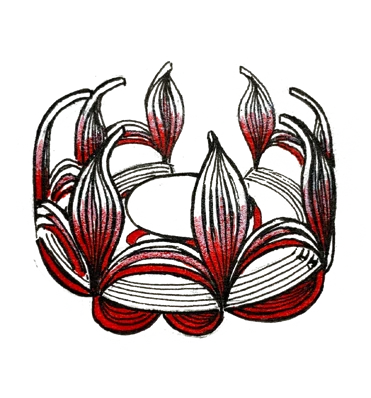
Nature object: reed
Reeds have spikes, and whenever there is a breeze these spikes sway with the wind. They form many repeated but graceful curves, and although the heads are separated, they always converge at one point.
Design opportunities
Next we listed twenty design opportunities. I kept returning to a few ideas I already had, and they shaped the list:
- A space that envelops the people inside
- Light that gives the environment flow
- A container that presents the liquidity of fluid
- Traditional mixed with contemporary
- Blooming flowers
- Fragmented, reassembled
- Layers of round surfaces
- Possibilities for repair and sustainability
Initial ideation
I listed descriptive words for the project to set its mood. Red runs through it: in China red stands for joy, auspiciousness, warmth and vitality, and at a reunion table people gather and connect with each other.
- Round
- Interconnected
- Bright
- Elegant
- Warm
- Curvilinear
- Concave
- Winding
- Curving
- Radiant
- Open
- Blooming
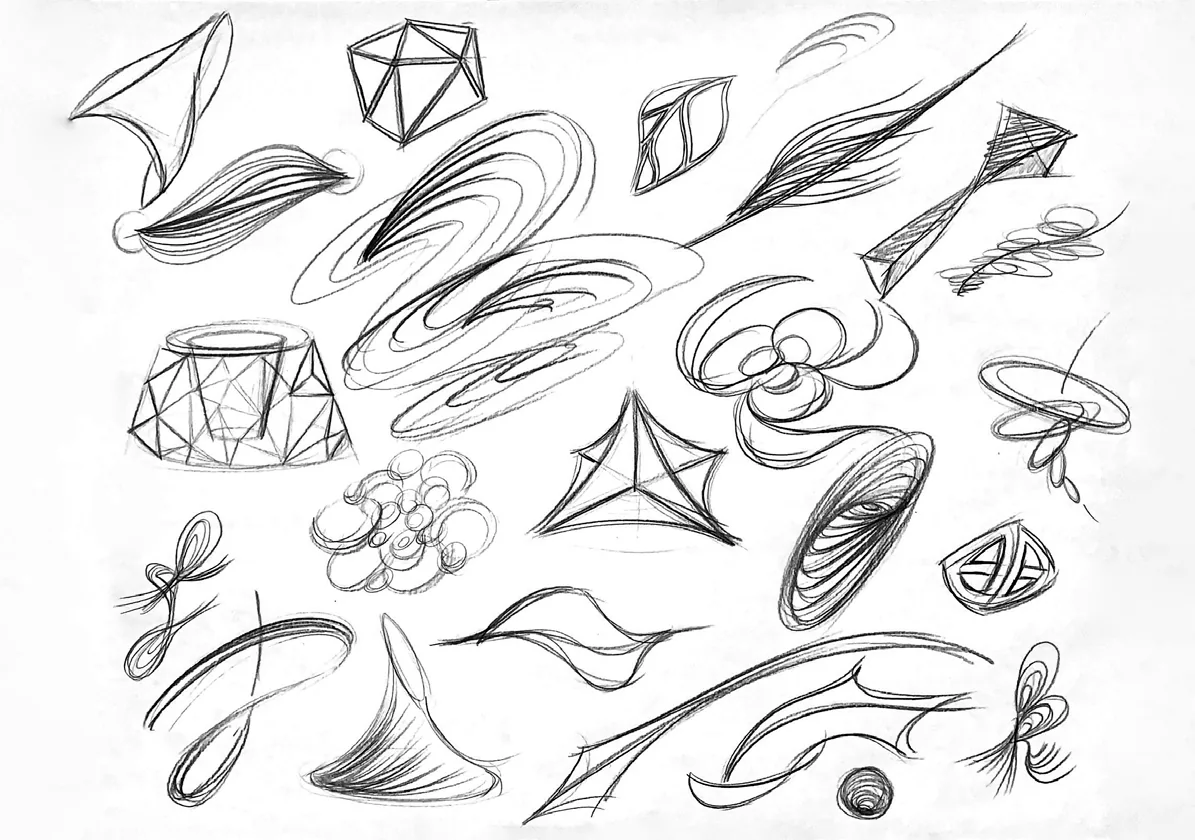
2D sketches, page 1
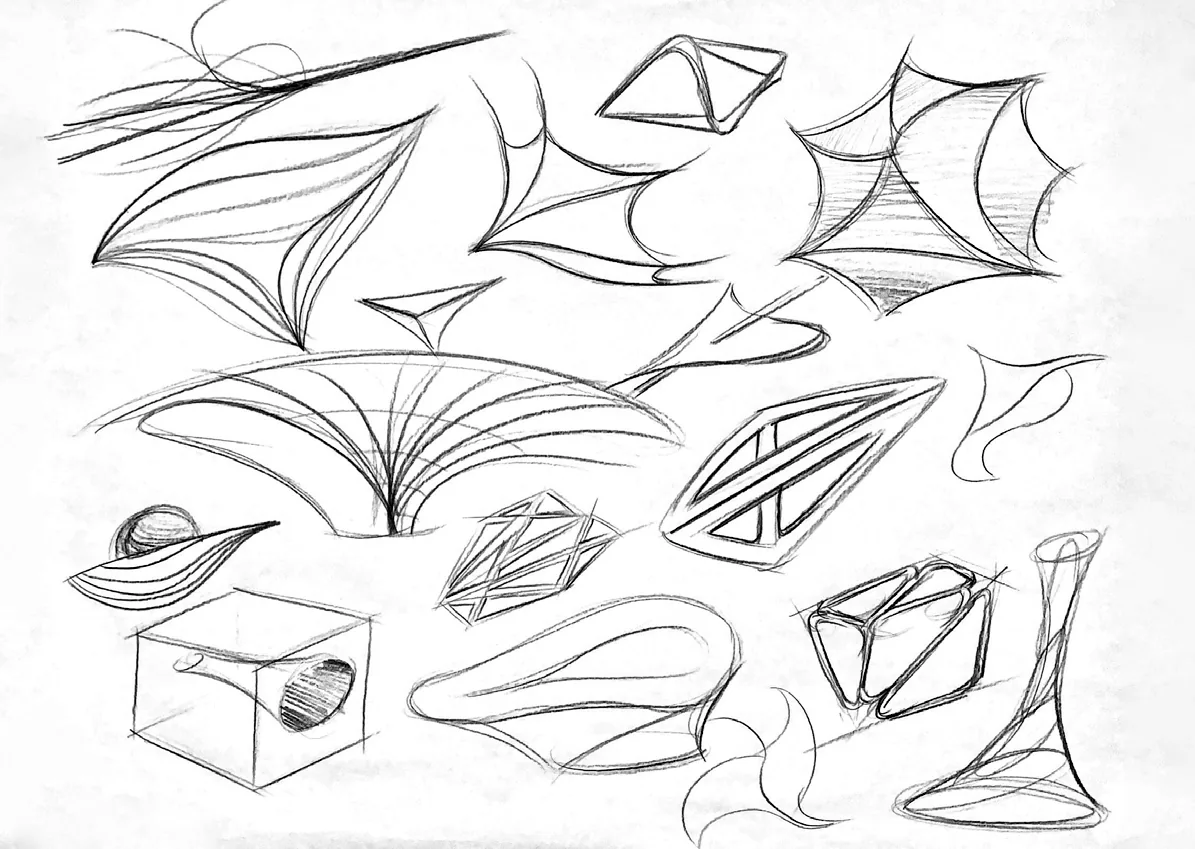
2D sketches, page 2
3D sketches
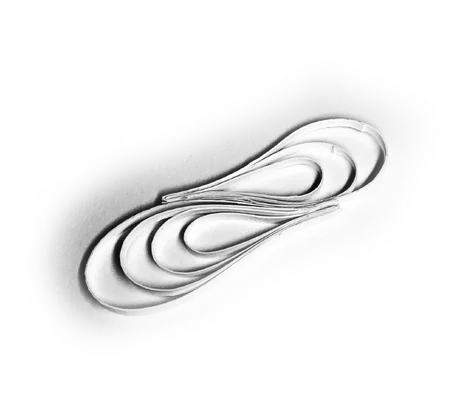
Combining the reed, the descriptive words and the mood, I made 3D models with paper and glue that express nature, curves and connection.

Sketch 1

Sketch 4
Sketch 2

Sketch 3

Sketch 5
Design exploration
Thumbnails and exploratory drawings
The thumbnail sketches are still abstract, but closer to the final design than the earlier 2D sketches.
To connect them to a direction, I combined elements from several design directions into one overarching theme, and the exploratory drawings became much more concrete.
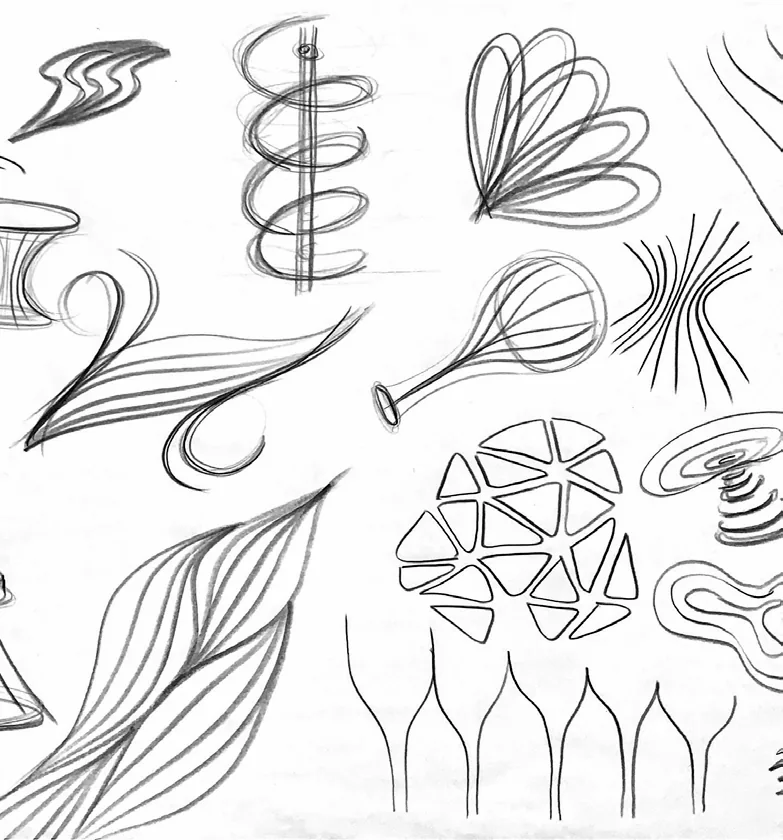
Thumbnail sketches
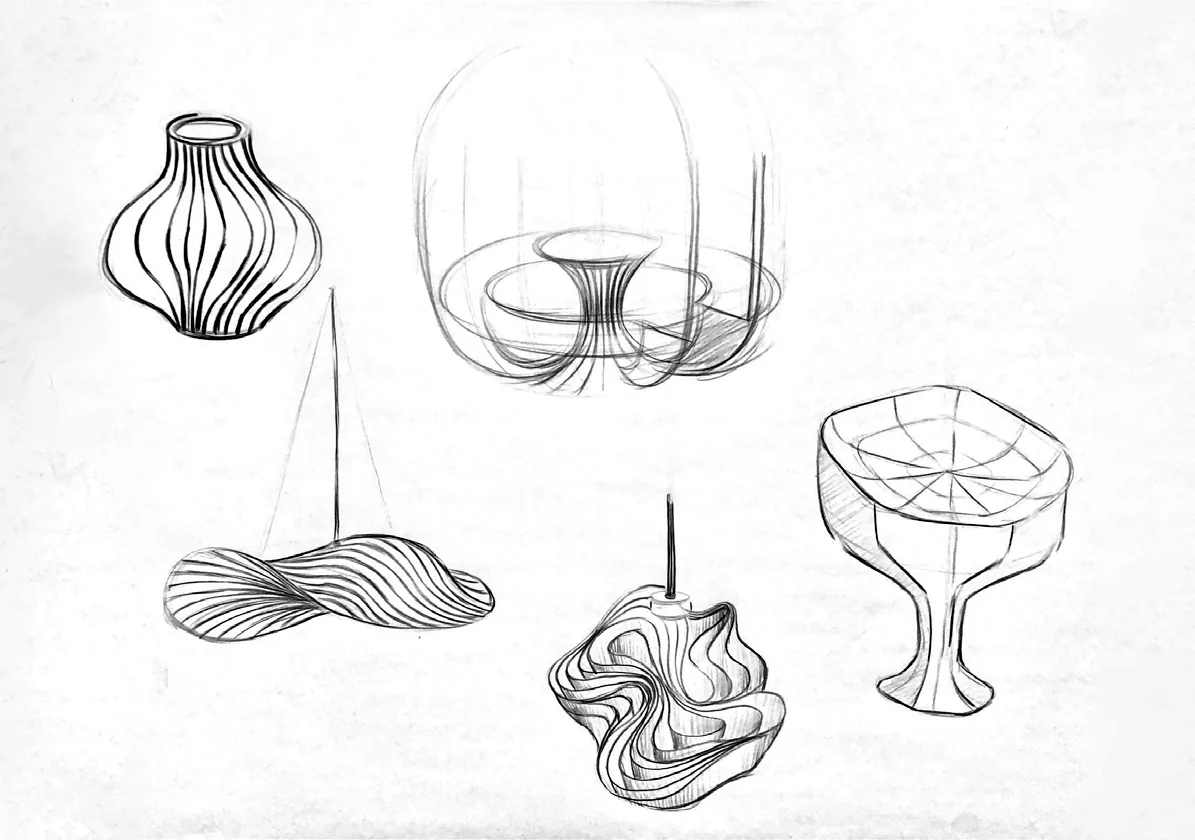
Exploratory drawings
Three directions
- Light that makes a space feel surrounded: warmth, waves, wholeness, being together; separated and then reunited.
- A space, or part of one, that feels like a reunion, holding everyone together.
- Making order out of chaos, bringing peace from disorder.
Ritual storyboard
With a direction found, I drew a storyboard of the ritual: a Chinese New Year meal, when family gathers to enjoy the holiday, food and reunion.
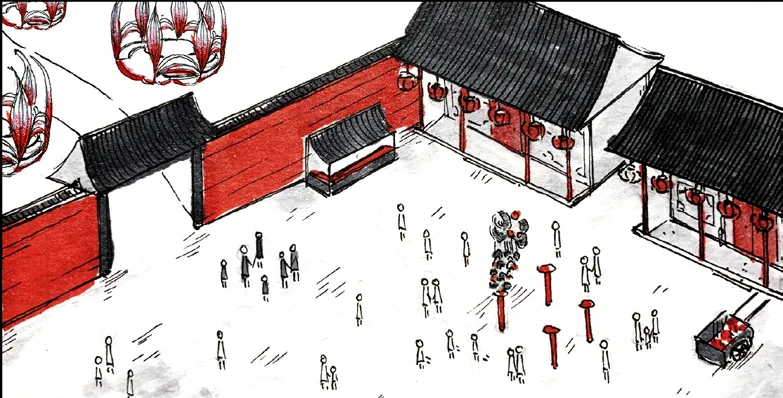
Arriving for the New Year
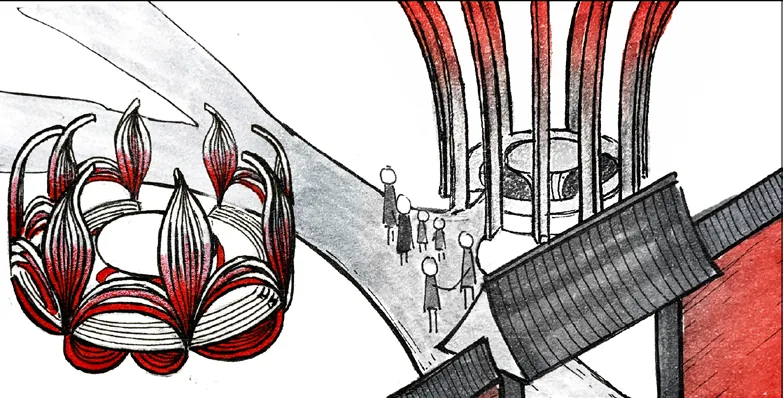
Final design (left) beside the initial design (right)
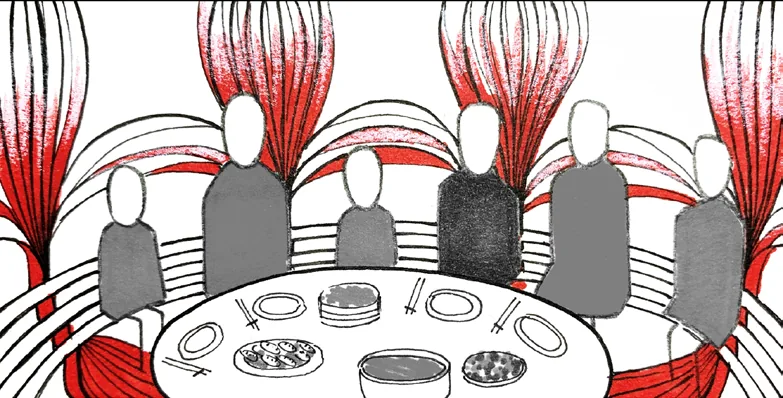
The reunion meal
Design refinement
Blooming celebrates togetherness and reunion during holidays like the Chinese New Year, creating a special place for family gatherings in restaurants and in indoor or outdoor public spaces.
Indoors
Installed in malls and restaurants as a dining space. Unlike an ordinary dining table, Blooming holds the people inside it, so they feel gathered and reunited.
Outdoors
Placed in parks and open spaces, its nature-like form fits into the landscape without looking abrupt, while still standing out.
Material
The structure is entirely plywood: easy to manufacture, inexpensive, and strong enough to hold the whole dining space together. It's finished with a layer of colour, acrylic or non-toxic organic spray paint, depending on budget.
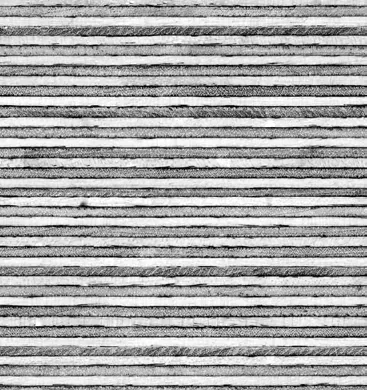
Plywood
Technical drawing
Top and front views. Blooming is 188 inches across and 144 inches tall, with a 60-inch table at its centre; the human figure shows the scale.
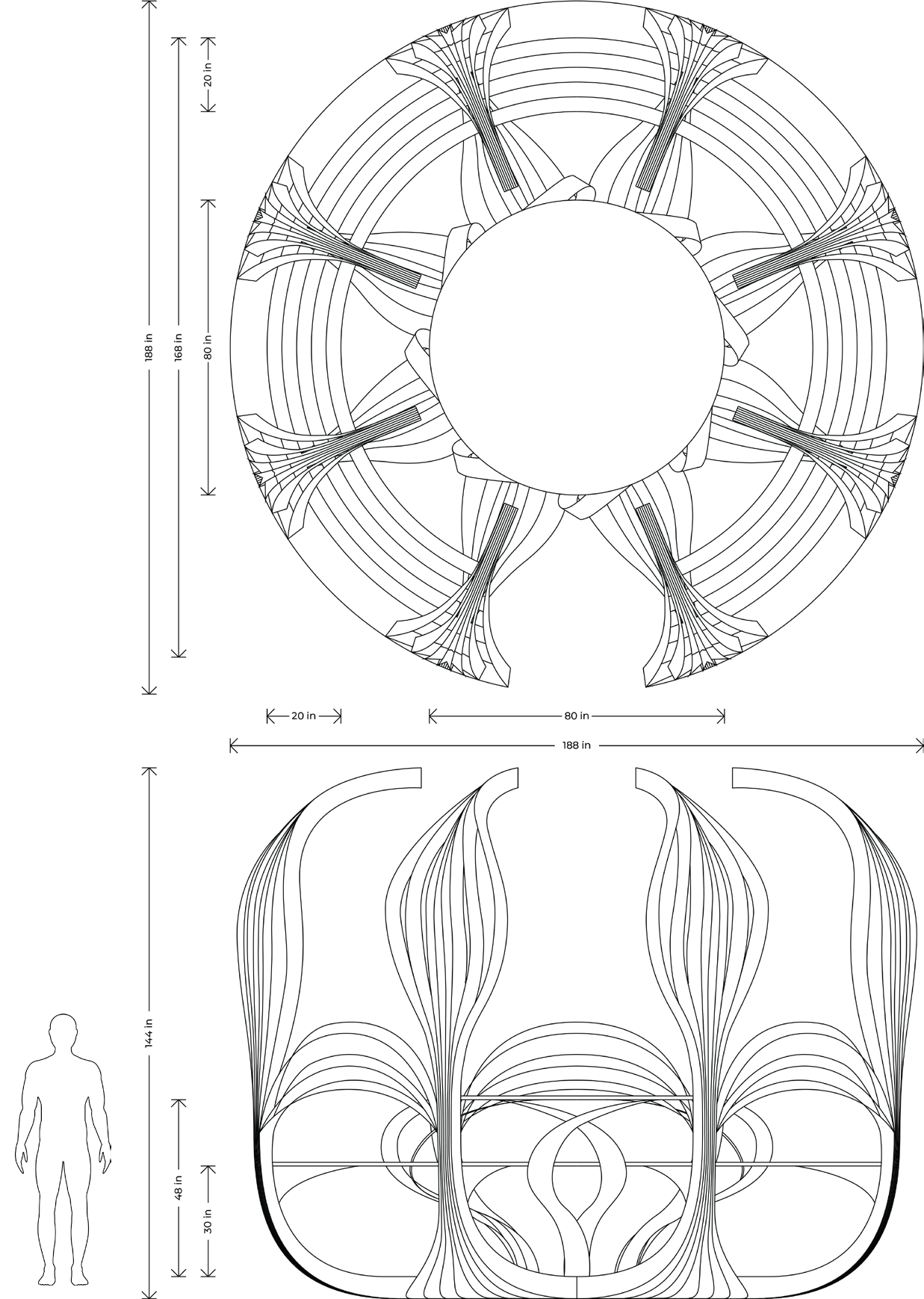
Top view (above) and front view (below)
Appearance model
Made from Bristol board and super glue. Paper is flexible and easy to work with, which makes it the right material for an appearance model.
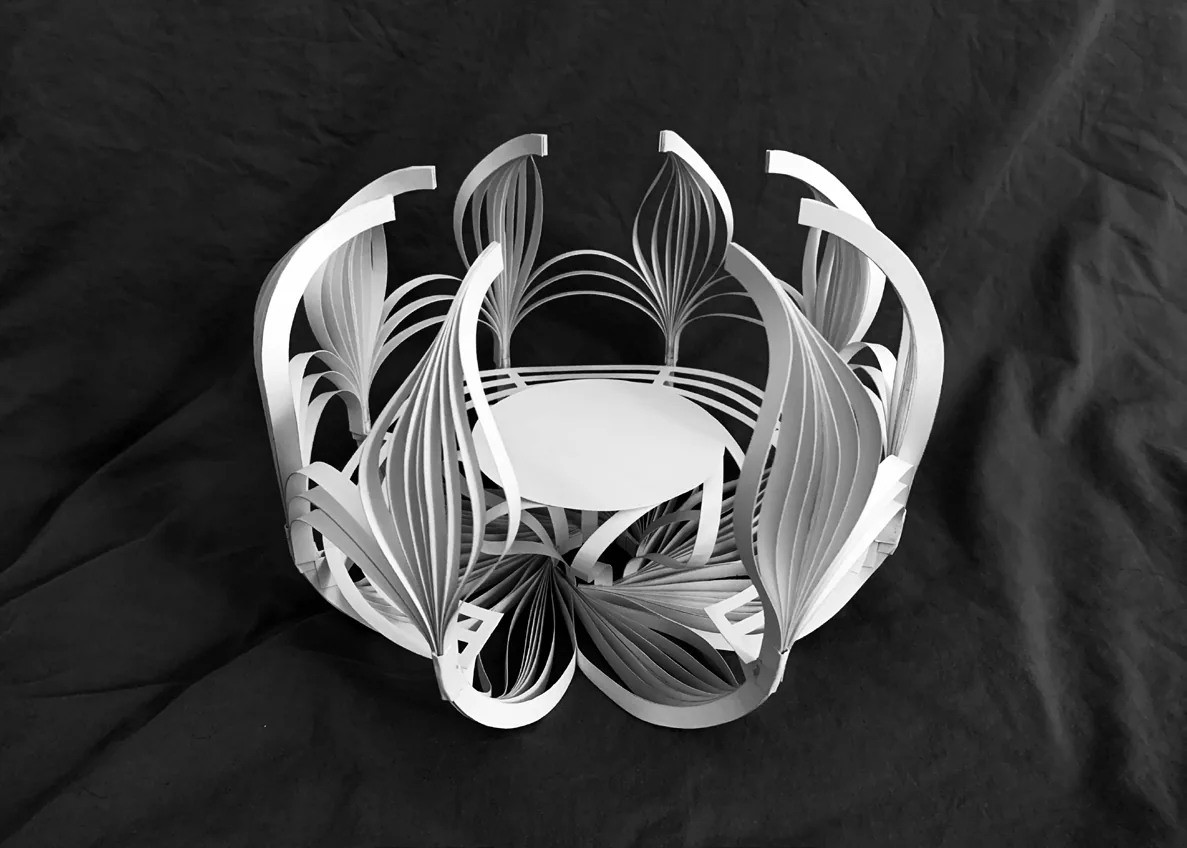
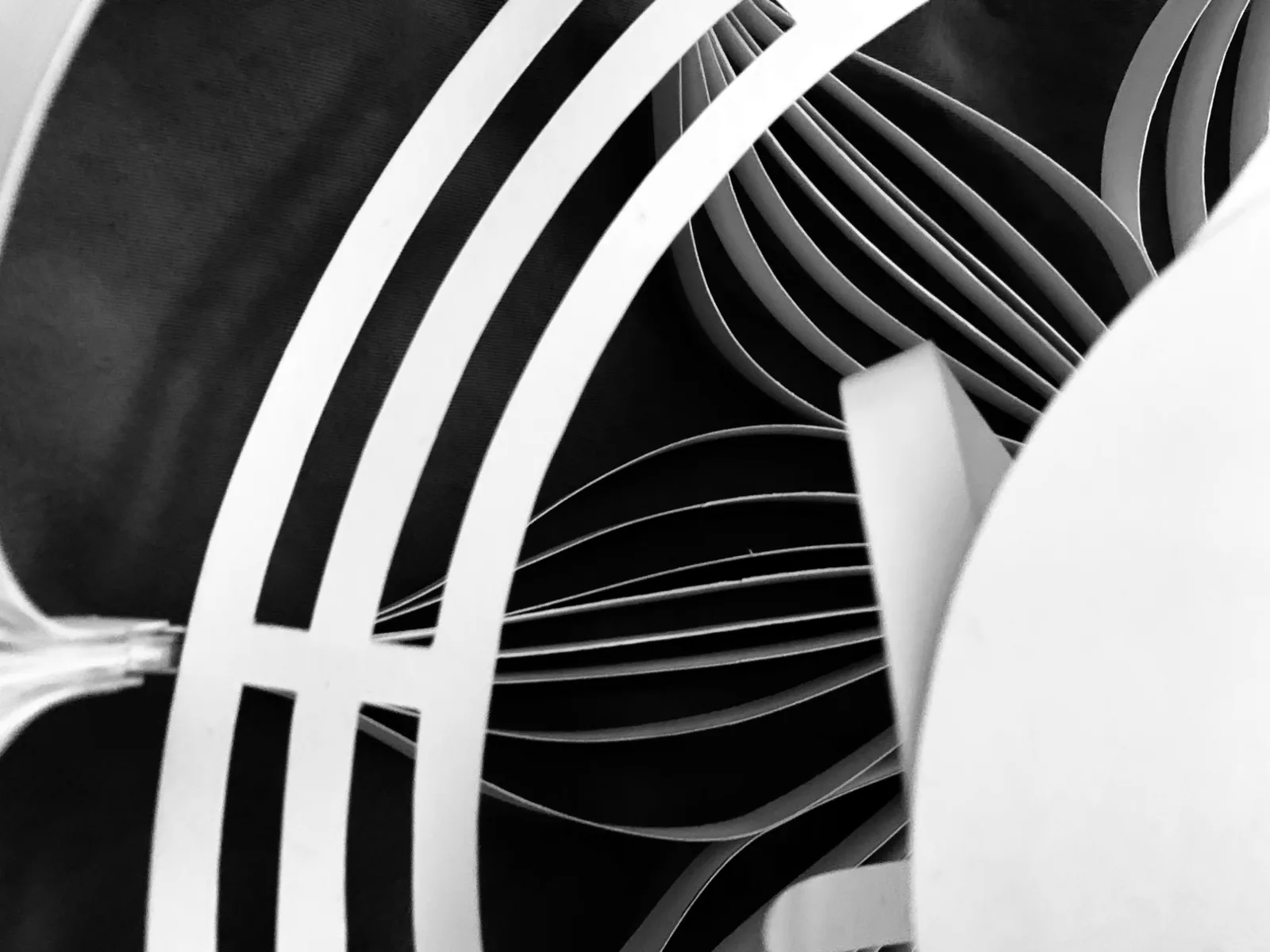



Assembly
Blooming is designed to be easy to assemble, ship and repair. Every petal is detachable, and the base petals share the side petals' form, so a damaged part is simply swapped for a new one. The centre table and each seat can be removed, replaced or shipped separately.
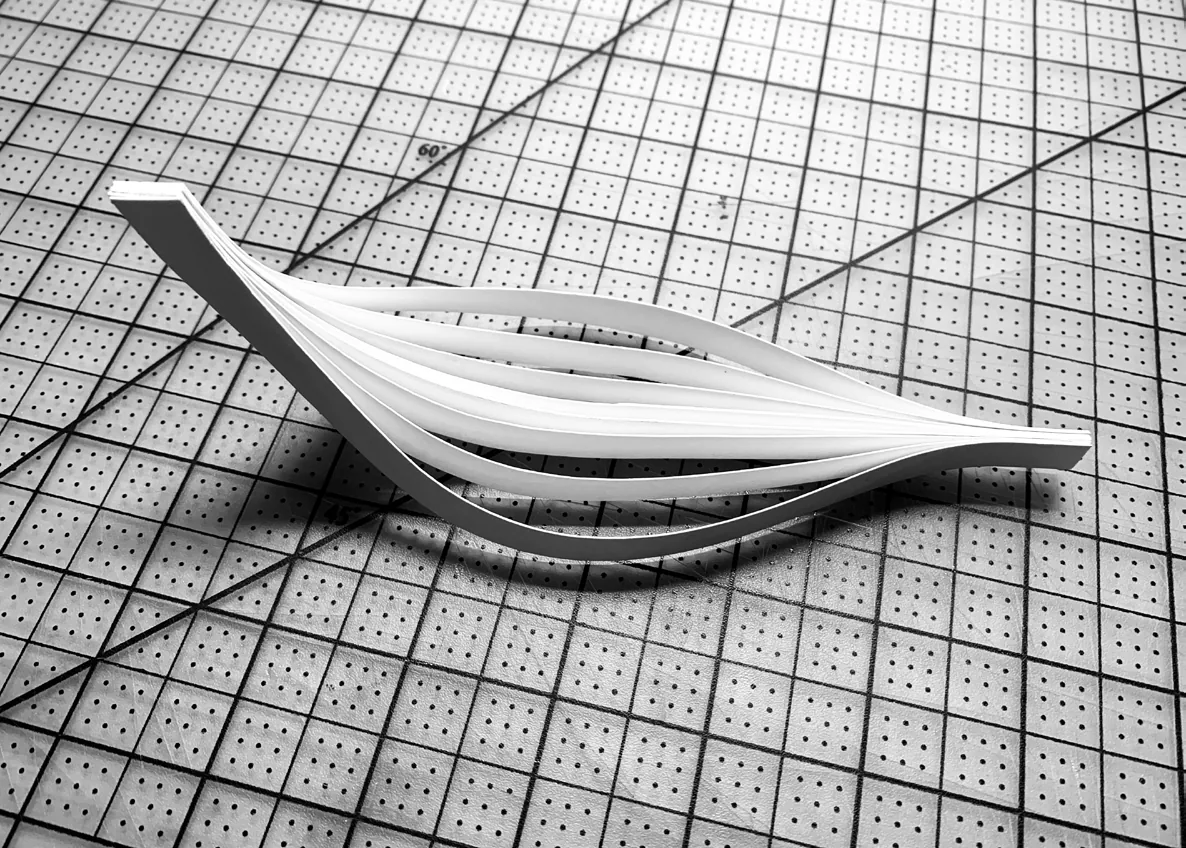
One petal
Accessibility
Each seat between two petals is detachable, so older people can get in and out more easily, and a seat can be replaced with space for a wheelchair.
In parks and other outdoor spaces, fewer chairs can be installed, so people arriving from any direction can find a place to rest.
Appearance Model
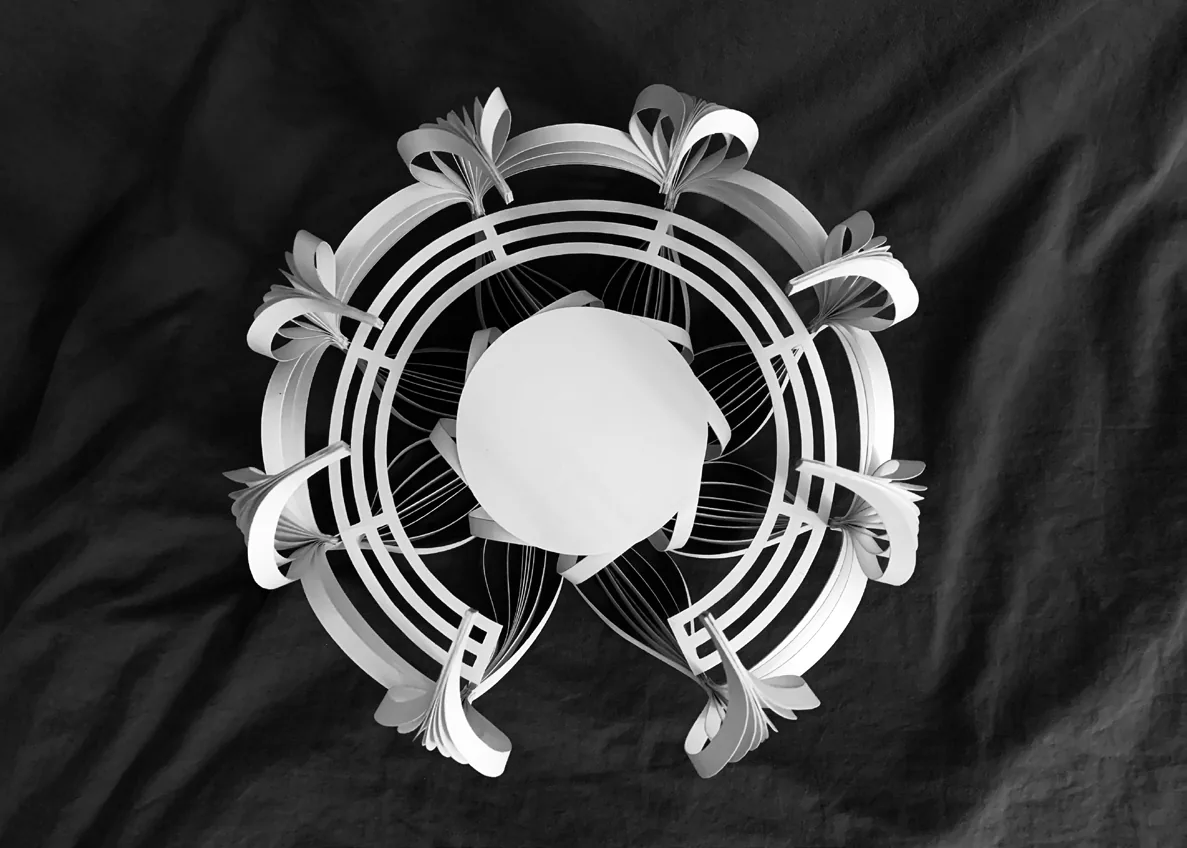
1 / 3